

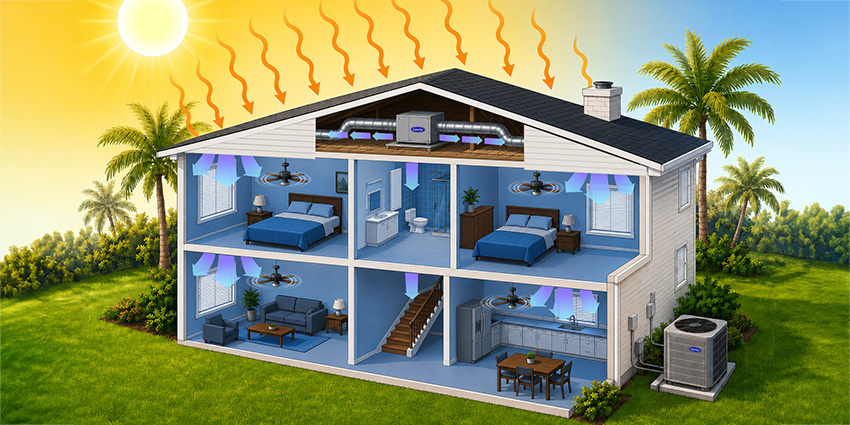
Summer Survival Guide:
Help Your AC Beat the Heat!
With the dog days in South Carolina bringing major summer heat and humidity, your air conditioner is working overtime. Here are a few simple tips and tricks to help your home stay cooler, reduce energy costs, and keep your system running more efficiently.
Keep Heat & Humidity Out
The hottest part of the day is 2:00–6:00 PM, so keep extra heat from entering your home.
Take these precautions to help:
- Close blinds and curtains on sunny windows.
- Use ceiling fans or portable fans to keep air moving.
- Run bathroom and kitchen exhaust fans while showering or cooking to remove heat and moisture.
- Avoid baking, cooking, or running the dishwasher during the late afternoon. Grill outside or prepare cooler meals instead.

Remember: Less heat and humidity indoors means your air conditioner doesn’t have to work as hard.
Help Your AC Work Smarter
A little homeowner maintenance can make a big difference.
Things you can do:
- Change your air filter every month—an easy reminder is whenever you pay your utility bill.
- Keep the outdoor unit free of leaves, grass, and debris so it can breathe.
- Make sure the condensate drain is flowing. As we like to say, “Drippin’ ain’t drainin’.”
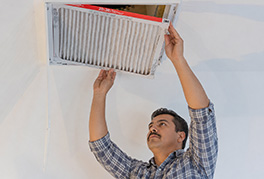
Remember: Change your filters regularly
Important! Changing filters and keeping the outdoor unit clean are great DIY tasks. Annual tune-ups, electrical inspections, refrigerant checks, and other advanced maintenance should be performed by a qualified HVAC technician.
Know What to Expect During Extreme Heat
Your air conditioner is designed to maintain about a 20° difference between the outdoor and indoor temperature. For example, if it’s 95°F outside, your system should comfortably maintain around 75°F inside. On extremely hot days—especially around 100°F—your home may warm up slightly during the afternoon. That’s normal.
Instead of constantly adjusting the thermostat:
- Set one comfortable temperature and leave it.
- If you have multiple systems, set them all to the same temperature.
Your system will recover naturally as outdoor temperatures cool in the evening.